

Government Digital Transformation: A Driver of Efficiency for Public Services
Why is digital transformation essential?
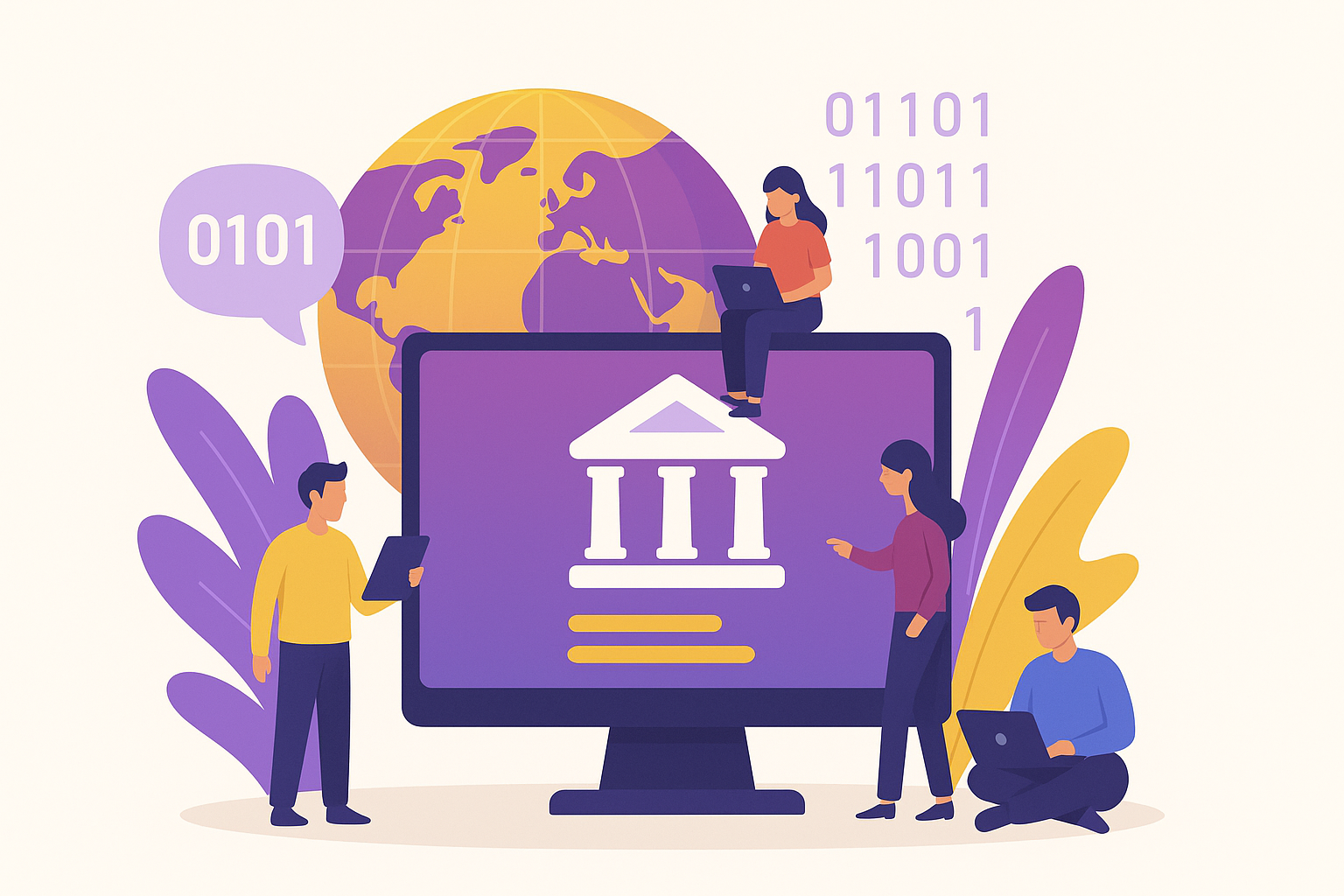
Digital technology is transforming how citizens interact with the state. Today, they expect public services fast, accessible online, personalized, and transparent — much like what they experience with private services.
To meet these expectations, administrations must rethink their internal processes, their tools, and also the training and support for their staff. Because while technology evolves quickly, it is above all the human element that makes the difference in this transition.
Clear Objectives: Simplification, Accessibility, Efficiency
Government digital transformation aims for several key objectives:
- Streamline administrative procedures : by eliminating paper forms and complex manual workflows.
- Make services accessible 24/7 via user-friendly and secure digital portals.
- Automate processes to improve efficiency and reliability.
- Reduce operating costs while improving service quality.
- Ensure transparency and traceability of interactions with the administration.
A good example of success is the service-public.fr portal, which centralizes a large number of online administrative procedures for citizens and businesses.
The challenges to overcome
Despite a strong political will and numerous initiatives launched in recent years, the digital transformation in the public sector remains a complex undertaking, sometimes slowed down by structural and human obstacles.
Here are the main challenges identified:
- Resistance to change : public employees, like any colleague, may express reluctance towards new tools or processes, especially when they perceive a lack of clarity on the benefits or a risk of losing control.
- System heterogeneity : each ministry, local authority, or administration uses a set of often different tools, which makes it difficult to harmonize practices and ensure the consistency of digital pathways.
- Insufficient interoperability : information systems do not always communicate effectively with each other, which limits the fluidity of data exchange and harms the overall efficiency of services.
- Digital divide : some citizens, particularly the elderly or those geographically isolated, have limited access to digital services or encounter difficulties in using them.
- Insufficient training : public sector employees often encounter new software or platforms without adequate support, leading to stress, errors, and demotivation.
To address these challenges, Digital Adoption Platforms (DAPs) play a key role. They enable users to guide users through their digital tools in real-time, directly from their work environment. Through contextual bubbles, interactive guides or targeted notifications, DAPs facilitate understanding, reduce errors, and enhance the autonomy of employees and users.
Public Sector Employees: Key Players in the Transition
It's not enough to simply provide tools. It's essential to support employees in adopting them. This involves:
- Integrated interactive guides within the tools
- Immersive training on job-specific skills
- Internal communication campaigns to raise awareness of the challenges,
- Regular adoption measurement to identify friction points and optimize user journeys.
Towards a redesigned public user experience (UX)
Digital transformation is not just about technology. It relies on a vision centered around the user (citizen, business, agent). This implies:
- Co-designing services with end-users,
- Tailoring journeys to various profiles (e.g., digital inclusion),
- Ensuring optimal accessibility (RGAA, plain language, human support).
Digital also enables personalize the experience and offer proactive service, for example, by informing a citizen that a document has expired or that a process can be renewed.
Security, Governance, and Digital Sovereignty
Another fundamental challenge is data protection. Public services handle sensitive data and must ensure:
- Compliance with GDPR,
- Robust cybersecurity,
- The use of sovereign clouds,
- Clear data governance , particularly to avoid silos and promote interoperability.
The tools used must therefore be reliable, secure, and interoperable with existing systems.
Measuring the impact of digital transformation
Finally, any transformation strategy must be evaluated. It is essential to measure:
- The usage rate of new digital services,
- The user satisfaction level,
- Theeffective adoption by staff,
- The time and productivity gains achieved.
Thanks to K-VALUE, these indicators can be tracked via a user-friendly adoption dashboard, allowing for adjustments to change management actions accordingly.
Government digital transformation is a powerful lever to make government more accessible, simpler, and more efficient. However, its success relies on three pillars:
- High-performing and accessible digital tools,
- Tailored human support,
- Continuous measurement of impact and adoption.
At Knowmore, we believe that the digital experience of public servants is a key factor in the quality of public services. That's why our solutions are designed to facilitate this transition, while placing people at the heart of modernization.
Are you a public administration leading a digital transformation project?
👉 Discover how K-NOW, K-STUDIO and K-VALUE can support your teams.
📅 Schedule a demo or speak with our experts to learn more.