UX is important because employees adopt the tools that are easy to understand, fit their real work and save them time. In digital adoption, a good user experience reduces errors, training time and support requests; a poor one leads to workarounds and quiet rejection, even of well-chosen software. That makes UX a lever in every ERP, CRM or HRIS rollout.
Key takeaways
- UX covers everything a user perceives when using a tool; UI is only its visible part (screens, buttons, menus).
- Poor UX is one of the first barriers to internal tool adoption: cognitive overload, complex journeys and little visible value.
- User research, short iterations and continuous feedback align the experience with employees’ real work.
- UX can be measured: task success rate, time on task, error rate, help requests and satisfaction.
What is user experience (UX)?
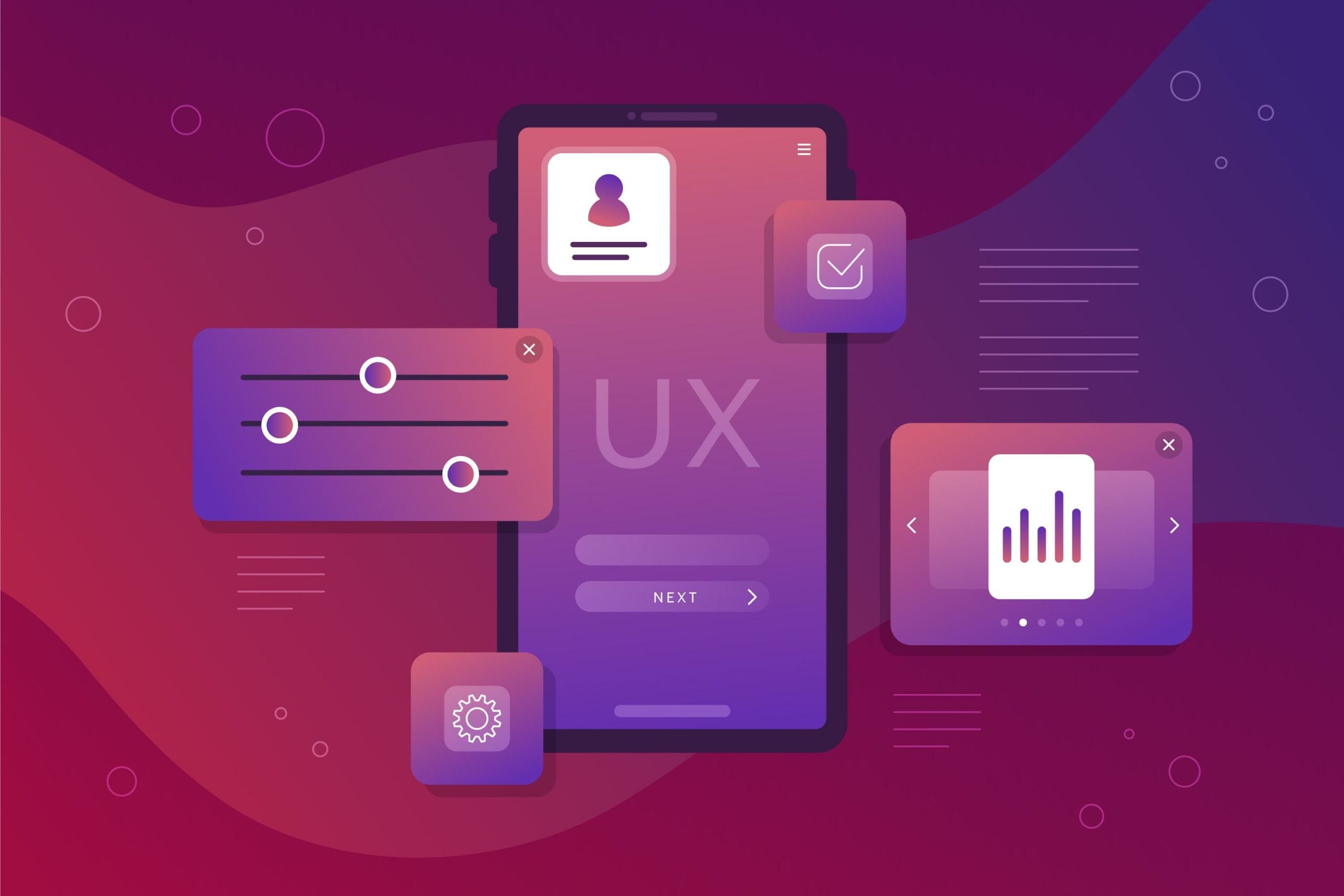
User experience, or UX, refers to all the perceptions and feelings a person has when interacting with a product or service, whether digital or physical. In practical terms, UX covers every aspect that influences the user's experience: ergonomics, ease of use, aesthetics, the emotions it evokes, accessibility, how well needs are met, and so on. The goal of UX is to make interactions as smooth, intuitive and enjoyable as possible. UX is distinct from UI (User Interface), even though the two are linked. UI refers to the user interface, i.e. the graphic and design elements the user interacts with (buttons, menus, colors, fonts…). UI therefore only concerns the visual surface. UX is a much broader concept that encompasses the entire chain of interactions, from deep-seated motivations to the emotions evoked. The aim is not just for the interface to look good or be easy to use, but for the overall experience to meet expectations and bring satisfaction. To deliver a good UX, it is therefore important to adopt a human-centered approach. Gaining a detailed understanding of target users, their needs and their pain points is essential. It is by starting from the user that you shape an engaging user experience.
How can you improve the UX of off-the-shelf software you don’t build?
Most internal tools are not built in-house: ERP, CRM, HRIS and collaboration suites come from vendors, with interfaces designed for thousands of customers. You cannot redesign them, but you can shape the experience your employees actually have:
- Configure before you train: hide unused fields and menus, simplify screens by role and align labels with your business vocabulary.
- Observe real work: identify the steps where users hesitate, make mistakes or give up, using field observation and support tickets.
- Guide inside the interface: tooltips, step-by-step walkthroughs and input checks at the moment of action compensate for weak spots in native ergonomics.
- Train by doing: a simulator that replicates the application lets people practice risk-free before rollout.
- Feed pain points back to the vendor: centralize feedback and raise it in user groups or product roadmap discussions.
This approach stays true to the human-centered design principles of ISO 9241-210: start from users, their tasks and their environment, then evaluate and adjust continuously. It involves both IT, which configures the tools, and business teams, who know how they are used. To go further on in-app guidance, see how a digital adoption platform layers onto existing applications.
What are the benefits of user experience in digital adoption?
Improving employee onboarding
Onboarding refers to integrating new employees into the company. It is a decisive stage in securing their buy-in to digital tools and processes. Yet onboarding often proves laborious. Newcomers find themselves overwhelmed by the sheer number of applications and procedures to master. This information overload creates stress and rejection. UX aims to smooth this digital integration through intuitive design. UX-centered onboarding journeys gradually guide users through the tools according to their specific needs. The emphasis is on simplicity and support.
Boosting adoption of business applications
Beyond onboarding, UX plays a major role in encouraging the day-to-day use of business applications. Employees are often reluctant to adopt new digital tools when these appear to make their daily work more complicated. Poor ergonomics and a lack of perceived value hinder engagement. UX puts the user at the center in order to design business applications that are genuinely useful and usable. Gaining a detailed understanding of the friction employees experience makes it possible to resolve it through the user experience. By making interactions smoother and the added value tangible, UX encourages voluntary adoption of digital business tools.
Breaking down silos between departments
Differences in tools and methods between departments often create silos that are detrimental to internal digital collaboration. Thanks to its cross-functional vision, UX designs unified user journeys across departments. Teams thus share common frameworks that make exchanges smoother.
Meeting employees' ergonomic needs
Poor ergonomics in digital solutions remains a major obstacle to their internal adoption. Confusing interfaces, cognitive overload, complex actions… Ergonomic friction frustrates employees. UX places ergonomics squarely at the heart of its approach: simplifying and streamlining interactions to eliminate any unnecessary friction. This ergonomic design, in step with users' expectations, secures and accelerates adoption. It turns technology into an enabler of everyday working life.
K-NOW , a digital adoption platform, guides your teams as they adopt business applications, such as the modules of your CRM. Like a GPS for applications, with smart guidance, alerts, notifications and feedback, as well as onboarding and real-time guided tours… it has everything for quick, smooth uptake.
How can you drive digital adoption in your company with UX?
There are several ways to boost digital adoption through UX:
- Carry out in-depth UX research: user research is an essential prerequisite for designing an engaging digital experience. It involves studying employees' expectations and pain points in depth through interviews and field observations. This immersion and empathy phase lays the foundations for impactful UX.
- Work in rapid iterations: agile development in small iterations makes it possible to test prototypes with users quickly. Feedback enriches the solution with each cycle, in a spirit of continuous improvement. This pragmatic approach, known as the "agile method", speeds up convergence towards an optimal UX.
- Continuously incorporate user feedback: even after launch, it is essential to keep gathering users' opinions and to enrich the UX accordingly. Spontaneous feedback and satisfaction surveys are full of valuable insights for fine-tuning the experience over time.
- Train employees in design thinking: introducing employees to human-centered design involves them in generating innovative UX ideas. They thus become active players in optimizing their own digital experience.
- Manage UX performance over time: UX indicators such as tool adoption rates or user satisfaction make it possible to track how the experience improves over time. This monitoring gives rise to targeted action plans that continuously boost digital engagement.
Ultimately, UX paves the way for a successful digital transformation, driven by employees who are fully on board thanks to solutions perfectly aligned with their expectations. The human factor thus emerges stronger from the digital revolution.
Knowmore helps companies design an engaging digital experience for their employees. Simplify and streamline the adoption of your internal digital tools by focusing on UX with Knowmore.
How do you measure the UX of your internal tools?
A “pleasant” UX cannot simply be declared: it has to be measured before and after each change. The classic usability metrics listed by IBM apply directly to business applications:
| Metric | What it reveals |
|---|---|
| Task success rate | Share of users who complete a process end to end without help |
| Time on task | Average time for a key operation (entering an order, an expense report…) |
| Error rate | Rejected entries, corrections, back-and-forth on the same screen |
| Help requests | “How do I…” tickets, views of documentation or contextual help |
| Satisfaction | Short post-task surveys, periodic surveys, open comments |
Tracked by screen or by process, these measures pinpoint the friction to address first. Start with two or three critical processes rather than trying to measure every screen. They complement adoption metrics (active users, features used) and digital employee experience metrics: a tool can be heavily used because it is mandatory while still being painful to use.
Frequently asked questions
What is the difference between UX and UI?
UI (user interface) is the visible layer of a product: screens, buttons, menus, colors and typography. UX (user experience) covers the whole experience of the user, including ease of use, perceived usefulness, accessibility and the emotions involved. A polished interface can still deliver poor UX if the journey does not match the user’s real work.
What is UX design?
UX design is the practice of making a product or service useful, usable and pleasant for the people who use it. It relies on user research (interviews, observation), journey design, prototyping and usability testing, repeated until the experience fits real needs. For internal tools, UX design also includes configuration choices and in-app guidance.
Is good UX enough to guarantee software adoption?
No. Good UX removes many barriers, but software adoption also depends on perceived value, change management, training and managers leading by example. Even a well-designed tool requires a learning period, especially for occasional users, so contextual guidance and hands-on training remain necessary alongside a strong user experience.
What does ISO 9241-210 cover?
ISO 9241-210:2019 sets out requirements and recommendations for human-centered design of computer-based interactive systems throughout their life cycle. It is aimed at those managing design processes and serves as a reference framework for usability professionals, without imposing a specific method. ISO last reviewed and confirmed the standard in 2025.
What is the difference between UX and digital employee experience?
UX describes a user’s experience with one specific tool. Digital employee experience (DEX) is broader: it covers an employee’s entire digital work environment, from business applications and devices to IT support and connectivity. Improving the UX of each internal tool therefore contributes to a better digital employee experience overall.