A PLM implementation succeeds when engineering, production, quality and purchasing actually use the PLM every day as the single source of truth for product data, not when the software goes live. Digital continuity helps by removing re-keying and breaks between tools; contextual training, business involvement and usage tracking do the rest.
Key takeaways
- A PLM implementation succeeds when users in every function work in the tool, not just when it is deployed.
- Digital continuity makes PLM adoption easier: less re-keying, seamless navigation between modules and up-to-date information.
- Clear goals, clean data, a pilot phase and a role-based training plan are key steps of a PLM implementation.
- Track PLM adoption with indicators such as active users by function, workflows completed in the tool, data quality and support requests.
In the era of Industry 4.0, digital continuity (or the digital thread) has become a strategic issue in PLM projects. Far more than a simple technical interconnection of product data, it represents a real opportunity to streamline the user experience and accelerate software adoption across organizations.
What is digital continuity in PLM?
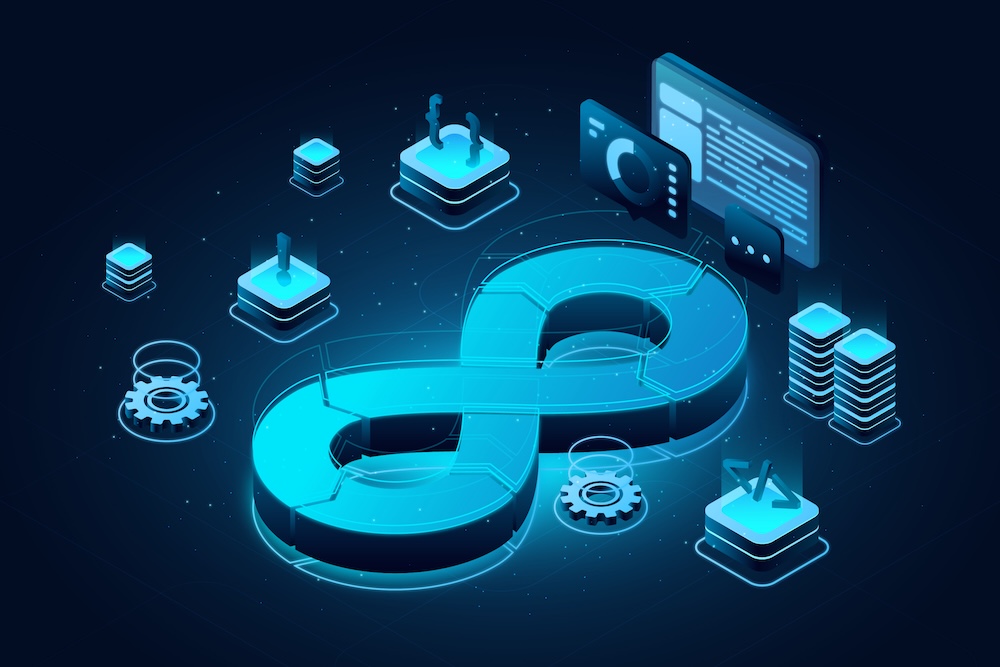
Digital continuity refers to the ability to smoothly and consistently link all the data relating to a product throughout its lifecycle: from design to manufacturing, through maintenance and right up to its withdrawal. This approach relies on an integrated, traceable flow of information between the various tools in the information system, in particular Product Lifecycle Management (PLM) platforms.
It makes it possible to break down silos, improve traceability and provide a single, shared view of the product at every stage of its development.
Why is digital continuity essential for PLM?
PLM is at the heart of the digital transformation of industry. But its effectiveness depends on an ecosystem of complex tools, often heterogeneous, used by multidisciplinary teams (engineering, production, quality, supply chain…).
Without digital continuity:
- Data is duplicated or lost between systems.
- Users struggle with complex, unintuitive interfaces.
- Errors and inconsistencies multiply, holding back innovation.
With well-designed digital continuity, companies gain in agility, collaboration and performance. Above all, they make PLM tools easier for users to adopt.
Adopting a PLM is about more than deploying it
In many industrial projects, technology alone is not enough. User adoption is often the weak link in PLM projects.
A tool may perform well, but without the right support, users struggle to understand how to use it, to build it into their routines and to get value from it.
This is where digital continuity becomes a software adoption accelerator, provided it is combined with a user-centered strategy.
What are the key steps of a PLM implementation focused on adoption?
A PLM implementation changes the way your company designs and evolves its products. To make sure users take ownership of the tool, prepare adoption from the scoping phase, not after go-live. PTC's implementation guide describes a similar sequence:
- Set clear goals: the problems you want to solve and how you will measure success.
- Select the vendor on functionality, scalability, ease of integration and support, once your needs are consolidated.
- Review and clean your data before migration, and plan integration with CAD and ERP to remove double entry.
- Secure organizational buy-in: involve key users from each function (engineering, quality, purchasing, production) in workshops and decisions.
- Build a training plan covering both the software and the changes to processes and workflows, by role.
- Run a pilot with a limited scope and supportive teams, then extend in phases rather than all at once.
- Go live and measure success against the goals set at the start, with reinforced support during the first weeks.
For a broader view of the approach, see our 8 steps for a successful software implementation.
How does the digital thread strengthen software adoption?
1. Smooth, intuitive navigation between tools
Thanks to digital continuity, users can move naturally from one module to another (CAD, document management, quality, production) without losing context. The result: less confusion and more autonomy.
2. Up-to-date, accessible and consistent data
One of the major obstacles to PLM tool adoption is the difficulty of finding the right information at the right time. The digital thread enables enhanced traceability of data and complete visibility of the product history.
3. Better collaboration between business functions
PLM platforms are often used by a wide variety of profiles. By ensuring consistent data and flows, digital continuity facilitates cross-functional collaboration, reducing friction between teams and encouraging adoption across the organization.
The key role of change management
Even with the best digital infrastructure, user buy-in cannot be improvised. It is essential to provide onboarding support for the PLM that is contextual, gradual and aligned with business needs.
Solutions such as K-now from Knowmore offer an in-app training experience, built directly into the PLM environment, enabling users to:
- be guided step by step
- train in real-life situations
- shorten their learning curve
Combined with a digital thread strategy, this type of approach supports lasting adoption of the tools and helps deliver the return on investment of digital transformation projects.
How do you measure PLM user adoption?
A deployed PLM is not necessarily a used PLM. If engineering changes keep circulating by email or in spreadsheets, the single source of truth loses its value. A few indicators show real adoption:
- Active users by function: the share of planned users who log in and perform actions, in engineering but also in purchasing, quality and production.
- Processes completed in the tool: the share of change requests, approvals and bill of materials (BOM) releases that go through PLM workflows.
- Approval lead times: average processing time of a review cycle, and the steps where files get stuck.
- Data quality: incomplete part records, duplicates, unlinked documents.
- Support requests: volume and topics, which reveal the features users misunderstand.
Set these indicators during scoping and track them after go-live to adjust training and in-app guidance. Our article on how to measure digital adoption details the method.
PLM + digital continuity + adoption: the winning trio
Digital continuity is not an end in itself; it is a lever for performance and user engagement. To make the most of it:
- Companies need to think about the user experience from the PLM design phase onwards.
- It is crucial to anticipate resistance to change with tools for contextual training.
- Most importantly, it is crucial to involve end users in building their digital journeys.
Knowmore supports large industrial organizations in this approach by combining technological innovation, learning expertise and no-code tools for successful, measurable adoption.
Conclusion: from data to lasting change
Digital continuity in PLM is not merely a technical matter. It is a strategic approach that connects data, tools... and, most importantly, users.
By combining the digital thread, ease of use and integrated training, companies create an environment conducive to innovation, productivity and engagement.
Are you preparing a PLM implementation or facing adoption challenges?
Discover how Knowmore can boost user engagement in your PLM solutions thanks to K-now, our digital adoption platform designed for complex environments.
Frequently asked questions
Why do PLM implementations fail?
A PLM implementation rarely fails for purely technical reasons. The most common causes are needs that were not consolidated before choosing the software, a scope that is too broad at launch, underestimated data migration and a lack of user support. When teams do not adopt the tool, they go back to spreadsheets and email, and the PLM stops being the single source of truth.
What is the difference between digital continuity and the digital thread?
Digital continuity and the digital thread describe the same principle: connecting a product's data without breaks throughout its lifecycle, from design to maintenance. 'Digital thread' is the term most used in English-speaking industry, while 'digital continuity' is the literal translation of the French 'continuité numérique'. In a PLM implementation, both mean that data flows between CAD, PLM, ERP and MES without re-keying.
How do you train users on PLM software?
PLM training works best when it combines several formats: training key users in each function, who then coach their colleagues; exercises based on your company's real cases; and contextual guidance inside the tool for infrequent tasks. Learning paths should be role-based, because an engineer, a buyer and a quality manager do not use the same PLM features.
Should PLM be integrated with ERP?
Yes, in most manufacturing companies. PLM manages the product definition (engineering bill of materials, documents, changes), while ERP manages its execution (purchasing, inventory, production). Without PLM ERP integration, bills of materials are re-keyed and discrepancies multiply. Integration is also a key condition of digital continuity, and therefore of PLM adoption.
Who should be involved in a PLM implementation?
A PLM implementation involves executive sponsors who carry the vision, an internal project team, the IT department and, above all, representatives of each function concerned: design office, manufacturing engineering, quality, purchasing, production and sometimes suppliers. These key users join scoping workshops, test the solution and then support their colleagues, which makes adoption easier.