

Improving the efficiency of HR teams is becoming a strategic priority for companies. But how can it be achieved in practice? HR process mapping offers a relevant answer. By providing a clear view of procedures and stakeholders, process mapping makes it possible to quickly identify areas for improvement.
What is process mapping?
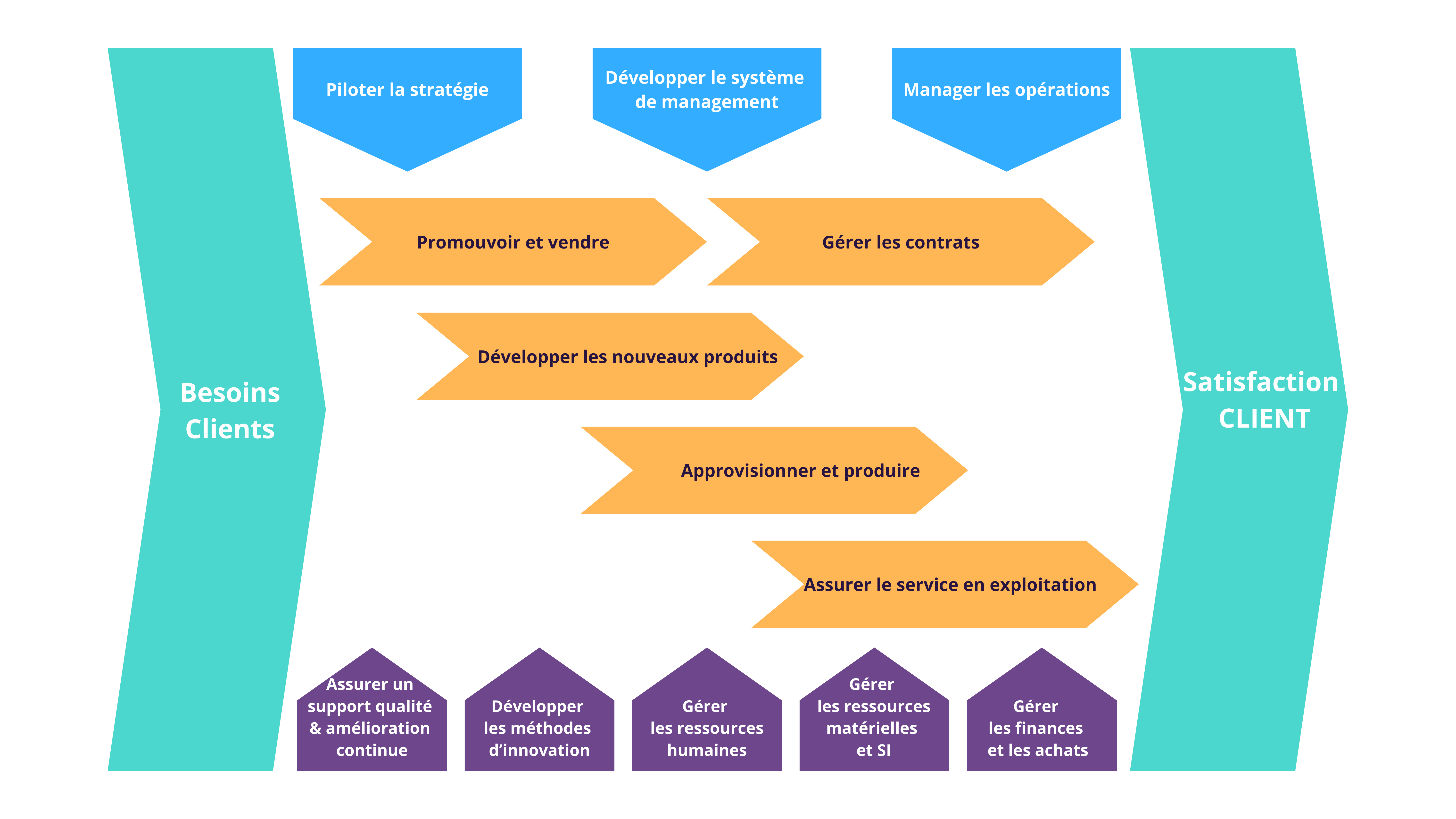
Process mapping involves visually modelling an organisation's various processes to gain an overview of how they work. In practical terms, the map identifies and precisely describes every step that makes up HR procedures, from when they are triggered to when they are completed. Each activity is documented with its characteristics: inputs, outputs, stakeholders involved, tools used, lead times and so on. Processes are represented as diagrams, usually workflows. These illustrate how tasks are sequenced, approval loops, decision paths and interactions between departments. By offering both a micro and a macro view, process mapping provides a complete reference on how HR processes are organised. It documents precisely how they are built and how they work internally. What's more, this modelling is essential for becoming more efficient.
Why map your processes?
What are the objectives of process mapping?
Process mapping makes it possible to improve a company's internal organisation in depth. By modelling procedures precisely, it provides an overview from which to identify opportunities for optimisation. Mapping is therefore an essential prerequisite before any transformation of existing processes. Mapping also aims to streamline and simplify processes. By analysing each step in detail, it identifies pain points and areas of complexity to be eliminated. Removing this friction revitalises procedures and makes them more agile. In addition, mapping strengthens process governance. By documenting processes exhaustively, it establishes rigorous reference frameworks that every stakeholder can understand. This documentation becomes a standard for managing workflows. Finally, modelling end-to-end interactions within processes makes collaboration between teams easier. Everyone can see exactly how they contribute to the overall workflow, resulting in better coordination.
The benefits of process mapping for businesses
Building a process map offers several expected benefits:
- A macro and micro view of processes: mapping models the workflow from end to end while drilling down to a very fine level of detail in each procedure. This dual perspective provides a precise understanding of how things work overall and of the specific features of each process.
- Determining exactly how to improve a process through in-depth analysis: mapping pinpoints the friction points in each task to shed light on the optimisations to be made.
- Documenting processes rigorously to provide complete reference frameworks: the map serves as formal documentation that details the steps, roles, tools, business rules and so on exhaustively.
- Improving communication and collaboration between teams thanks to an overview of interactions: mapping shows all the points of coordination between departments to make exchanges smoother.
- Planning effectively for future process optimisation and automation projects: modelling highlights automation opportunities and lays the groundwork for future initiatives.
Process mapping therefore offers an extremely accurate snapshot of how processes are organised — a prerequisite for taking action to make them perform better.
How to create process mapping tailored to your organisation: 7 steps
1. Define the objectives of each process (very) precisely
This means formalising the purpose of each HR workflow: what is it for? What added value does it deliver? What results must it produce?
2. Determine the expected outcomes of each procedure
For each process, list exhaustively the deliverables that must be provided once it has been carried out.
3. Identify all the stakeholders involved
List all the internal and external stakeholders involved in running HR workflows.
4. Record the resources used in each process
This involves listing the tools, applications, documents and logistical resources used to carry out the tasks.
5. Set out regulatory and operational constraints
Identify the legal frameworks and business rules that apply to the processes.
6. Produce detailed process documentation
Model precisely the sequence of tasks, approvals and decision loops for each workflow.
7. Highlight areas for improvement
Analyse the pain points and the opportunities for optimisation or automation in each process.
Conclusion
This methodology ensures a tailor-made map that faithfully reflects the existing situation, paving the way for future development. In conclusion, investing in in-depth HR process mapping is a genuine lever for progress. By meticulously modelling HR procedures, mapping provides an in-depth understanding of how they are built and how they interact. This overview highlights the concrete levers to pull in order to streamline and optimise how processes are organised. Armed with these insights, HR teams can undertake an in-depth transformation of their processes, ensuring greater agility and performance. Process mapping thus provides a solid foundation on which to build a digitalised, simplified HR organisation focused on added value.
Don't let complexity slow you down. Find out today how Knowmore can support you on the road to operational excellence. Contact us for a demo of our solutions!